
School leaders across the country are navigating a moment that feels both urgent and uncertain.
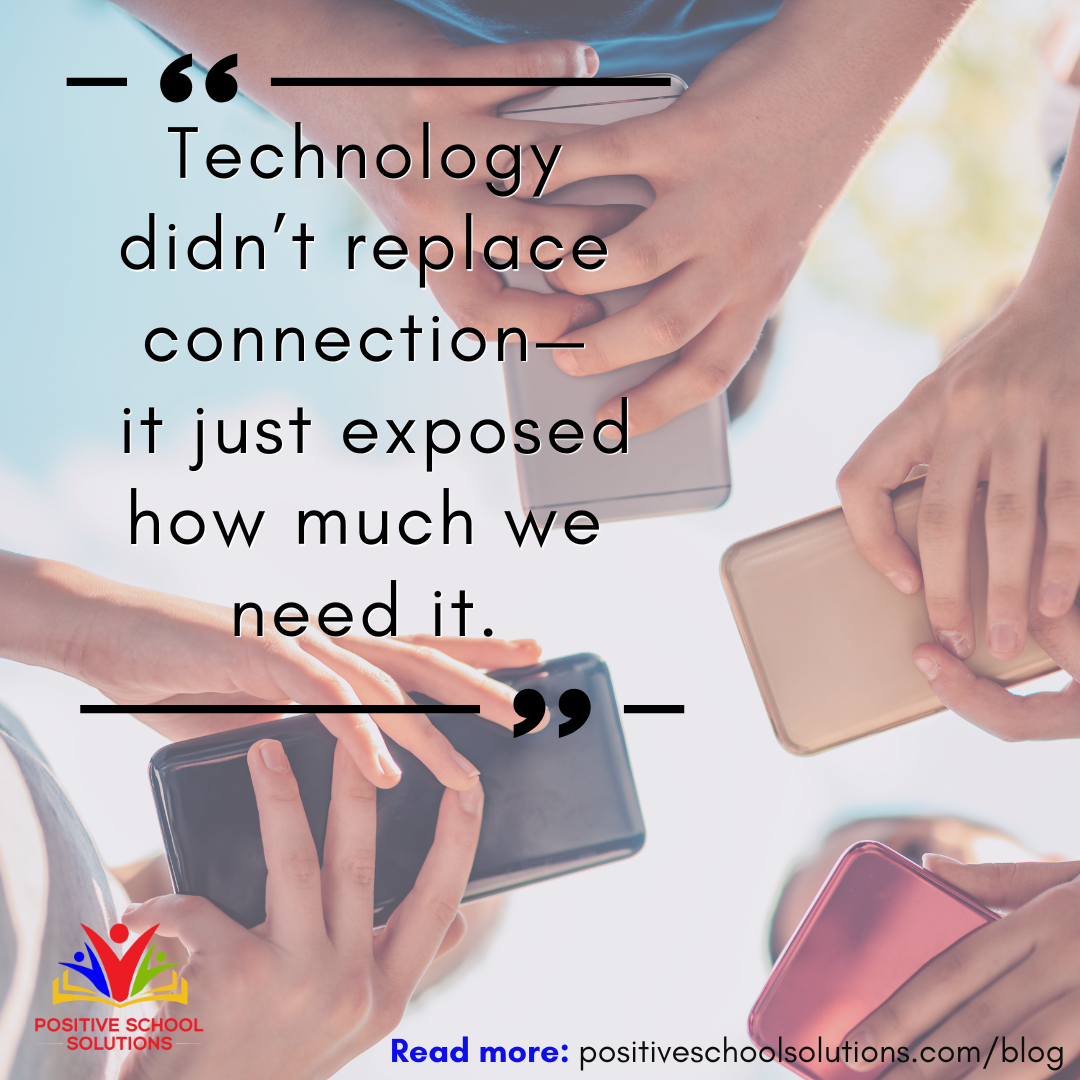 In just a few short years, many schools moved toward 1:1 devices, digital platforms, and technology-rich instruction. It made sense—preparing students for a modern world required digital fluency. But now, the landscape is shifting again.
With the rise of cell phone bans and a growing movement from families pushing back on screen time, schools are being asked to recalibrate—quickly.
And that leaves many leaders asking a very real question: How do we maintain the benefits of technology while rebuilding the human connection our students desperately need?
This isn’t about going backward. It’s about moving forward with intention.
If you’re feeling the pressure, you’re not alone.
You’ve invested time, training, and resources into technology. Teachers have built systems around it. Students are used to it.
And yet:
- Attention spans are shifting
- Social skills are lagging
- Engagement often feels passive rather than active
At the same time, expectations haven’t slowed down. Students still need to collaborate, communicate, think critically, and solve problems—skills that are fundamentally human.
The challenge isn’t choosing between technology or connection.
It’s designing for both—on purpose.
The most effective schools right now aren’t removing technology—they’re redesigning how it’s used.
Instead of long stretches of independent screen time, they’re asking:
- When does technology enhance learning?
- When does human interaction deepen it?
That shift opens the door to small, powerful changes that can transform classrooms without overwhelming teachers.
Here are 5 practical moves to increase student interaction (without abandoning tech)
1. The “Human-First” Five
Instead of students walking in and immediately flipping open a lid, try this 5-minute shift: The Device-Free Start.
- The Move: The first three to five minutes of class are for greeting and connection.
- The Impact: In one school we worked with, teachers started with just a few minutes of device-free conversation—and within a week, they noticed significantly higher participation during the actual lesson because students were already “warmed up” to talking.
2. Move from Consumption to Conversation
We often use technology as a solo activity. We can shift that by building in “Dynamic Breaks” during a digital task.
- The Move: If students are doing 20 minutes of digital research, set a timer. When it goes off, it’s “Lids Down” for a 2-minute “Turn and Talk” about one thing they found interesting. Consider giving students a simple prompt:
- “What did you notice?”
- “What surprised you?”
- “What’s one question you still have?”
- The Impact: It breaks the “digital trance” and forces the brain to synthesize information for a real audience—a classmate.
3. Use Movement-Based, Face-to-Face Structures
When energy drops, screens often make it worse.
- The Move: Incorporate strategies that get students interacting physically and verbally like stand-and-share activities, line-up debates (agree/disagree), small group rotations
- The Impact: These aren’t just “brain breaks”—they’re engagement resets that increase focus and collaboration.
4. Structured Reflection (No Typing Required)
We’ve grown accustomed to digital exit tickets because they’re easy to track, but they often lack the depth of a verbal exchange.
- The Move: Swap one digital reflection a week for a “Stand Up and Find” activity. Students stand up, find someone across the room, and answer a single reflection question face-to-face.
- The Impact: This builds social capital and gives students a much-needed kinesthetic break without losing instructional time.
5. Redesign Lessons with a “Learn → Process → Apply” Flow
The most effective tech use is a catalyst for human interaction, not a replacement for it.
- The Move: A powerful structure for balancing tech and interaction:
- Learn (often with technology)
- Watch, read, research, or explore
- Process (with peers)
- Discuss, summarize, question
- Apply (independently or collaboratively)
- Solve, create, demonstrate understanding
- Learn (often with technology)
- The Impact: This ensures students aren’t just consuming information—they’re actively making meaning of it.
What This Looks Like in Practice
In one of our long-standing partner schools, we noticed a powerful change these small shifts had made. The classrooms didn’t look drastically different—but they felt different.
Students were talking more.
Teachers were circulating and engaging more.
Energy was higher.
Behavior issues decreased.
Not because technology was removed—but because it was balanced.
Where to Start
You don’t need a full overhaul.
Start with one question:
“Where in our day can we intentionally increase human interaction—without adding more to teachers’ plates?”
Then choose one small shift:
- A discussion after screen time
- A daily connection routine
- A structured lesson flow
Small changes, implemented consistently, create meaningful impact.
The Bottom Line
This moment in education isn’t about choosing sides.
It’s about leading with clarity in a time of rapid change.
Technology will continue to evolve. Expectations will continue to shift.
But one thing remains constant: Students learn best when they feel connected—to the content, to their peers, and to the adults in the room.
And that’s something no device can replace.
Ready to turn these ideas into consistent classroom practice?
Explore our on-demand 3-part course series,
Strategies for Increasing Academic Engagement,
designed to help teachers increase student interaction, elevate engagement,
and make learning stick.

Written by Sarah FIllion 2026