

 You sit down during your prep period to plan tomorrow’s reading lesson. Then a colleague pops in with a quick question. A student comes back for something they left behind. By the time you pull up the lesson again, it’s almost time to pick up your class.
I know that feeling of trying to get started over and over again. The other day, every time I sat down to focus, something else needed my attention. By the time I was halfway to the vet for an unexpected visit, I could feel the whole morning in my body. My shoulders were up by my ears. My belly was clenched. I was gripping the steering wheel.
Just that weekend, I’d practiced coming back to myself after little interruptions around the house. It had felt pretty doable then. Somewhere on that drive, it clicked. Oh. This is another chance to practice. The conditions are just different.
I noticed my breathing. The sky was bright blue, and it was surprisingly warm for this time of year. I let my shoulders drop. Little by little, I felt more settled.
As educators, we see this all the time. Your students can line up smoothly every day, then the fire alarm goes off and suddenly that familiar routine takes a lot more effort. They’re learning to use the same skill under different conditions. We need those chances to practice, too.
Of course, some school days are difficult for reasons that a deep breath can’t fix. Repeated behavior interruptions, competing demands, and a lack of support can leave you carrying far more than you should have to. Those challenges deserve attention, too. That’s why supporting educator well-being requires looking at both individual needs and the school environment.
But while you’re working through what needs to change, you also deserve a way to give yourself a little space at the end of the day.
That moment in the car reminded me that a reset doesn’t have to change what’s happening around us. Sometimes it simply helps us notice what we’re carrying and choose what comes next.
Give yourself a little space between school and home
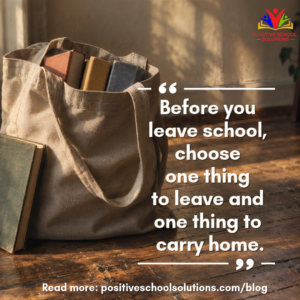
Before you leave school, choose one thing to leave and one thing to carry home. Maybe you decide the reading lesson that went sideways from 10:15 to 10:45 can wait until tomorrow. You don’t have to solve it on your way home. What you carry home might be the student’s tiny breakthrough you almost missed, or the moment a colleague came in and the two of you laughed so hard you couldn’t stop.
Before you walk through your front door, take a moment for your to-be list. Instead of thinking about everything you still need to do, think about how you want to show up for the next part of your day. Ask yourself, How do I want to be when I walk in? Maybe you want to be present enough to hear someone’s story about their day. Maybe you want to be kind to yourself and take a few quiet minutes before you start dinner.
Try it on an ordinary day. Give yourself another chance to practice on a day when you can still feel the reading lesson in your shoulders.
You won’t always leave school feeling settled. And you won’t always remember to pause before walking through your front door.
That’s okay. These are skills you can keep practicing, even when the conditions change.
That’s the idea behind Lesson Plan for Life™, our six-week well-being program for educators. With just 10 minutes a day, you’ll practice small, manageable skills that help you respond to stress and make more room for the parts of life that matter to you.
Written by Sarah Fillion 2026